


“The mountains may disappear, and the hills may come to an end. But my love will never disappear. My promise of peace will not come to an end,” says the Lord who shows mercy to you.”
—Isaiah 54:10 (NIV)
This passage paints a beautiful image of God's enduring love, but it does so in contrast to images of destruction and desolation. While we can draw comfort in the message that God's love is strong enough to endure anything, we might also find ourselves asking "where is this peace?" in a world that seems to mock this promise. This tension between despair and hope is not unique to our 21st century experience. It is older than the words of Isaiah and stretches all along the river of time. Reflecting on this scripture, I am reminded of three songs that wrestle with and respond to the tensions captured here. These songs sustain me, even when the darkness tries to overshadow, and I pray that they can be that for you as well.
I. The first time I encountered this beautiful and haunting text, it was sung by a seventy voice children's choir, and that memory has never left me, decades later. It was a musical setting by Z. Randall Stroope entitled Inscription of Hope, and is based on a poem found inscribed on a cellar wall in Cologne, Germany, written by a Jewish person hiding from the Nazis during World War II:
"I believe in the sun, even when it is not shining.
And I believe in love, even when there's no one there.
And I believe in God, even when he is silent."
One of my favorite settings of this text is the hauntingly beautiful setting by Mark Miller entitled I Believe. Other musical reflections of this text that I encourage you to explore include Kim André Arnesen's Even When He Is Silent, Thomas Juneau's I Believe in the Sun, and Ēriks Ešenvalds' I Believe.
II. 19th-century poet Henry Wadsworth Longfellow meditated on the words "of peace on earth, good-will to men” in his poem "Christmas Bells.” Each stanza ends with these words as he hears the church bells pealing and carols sounding, but then he paints a dark and destructive picture (of contemporary national strife) that threatens to drown out the message of peace: "And in despair I bowed my head; 'There is no peace on earth,' I said; 'For hate is strong and mocks the song of peace on earth, good-will to men!'" The final stanza of the poem reclaims Isaiah's promise of peace: "God is not dead, nor doth He sleep; the wrong shall fail, the right prevail, with peace on earth, good-will to men."
III. The final song I want to share with you is My Peace written by French composer Jacques Berthier for the international ecumenical Taizé Community that focuses on reconciliation and prayer. The words come from Jesus's message to his disciples (John 14:27), but speak to the enduring peace promised in Isaiah, even at a time filled with questions and confusion.
You can listen to all of these musical meditations online, and I encourage you to make them a part of your exploration of Advent.
We are surrounded daily by reminders that hate is strong and mocks the song of peace, but I pray that the words of Isaiah and the words of Jesus remind us that God's peace is enduring even in the darkest of times, even when God is silent, even when the sun ceases to shine. May you be a torchbearer into the darkness, shining God's promise of never-ending love and peace.
How can the juxtapositions in the scriptures and songs discussed above help you live in the tension of peace that seems silent?
How might you offer compassion and hope to those around you at a time when darkness presses in?
Associate Dean of Research and Engagement and Librarian
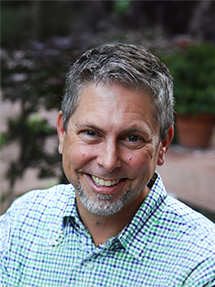
In his role as the Associate Dean for Research and Engagement, Sha Towers provides administrative leadership across Baylor University’s University Libraries in the areas of public services, research, space planning and user engagement. He leads the division of Research & Engagement, comprised of the liaison librarian program, instruction and information literacy, data and digital scholarship, public services for Moody and Jones Libraries, and the Arts and Special Collections Research Center. He is the founder and curator of the Baylor Book Arts Collection and serves as the liaison librarian to the departments of Art & Art History and Theatre. Towers is a visual artist working in calligraphic and book arts. His artist's books appear in private and university special collections across the United States and have been featured in international juried and invitational exhibitions.
Towers began his librarianship journey as an undergraduate student worker in the Crouch Fine Arts Library and during grad school, he began working full time there. He joined the Baylor faculty in 2003, serving as the head of the fine arts library for nine years before taking on a series of administrative leadership roles in the University Libraries. He holds bachelor’s and master or arts degrees from Baylor University and a master of Library and Information Science from the University of Texas at Austin.
