
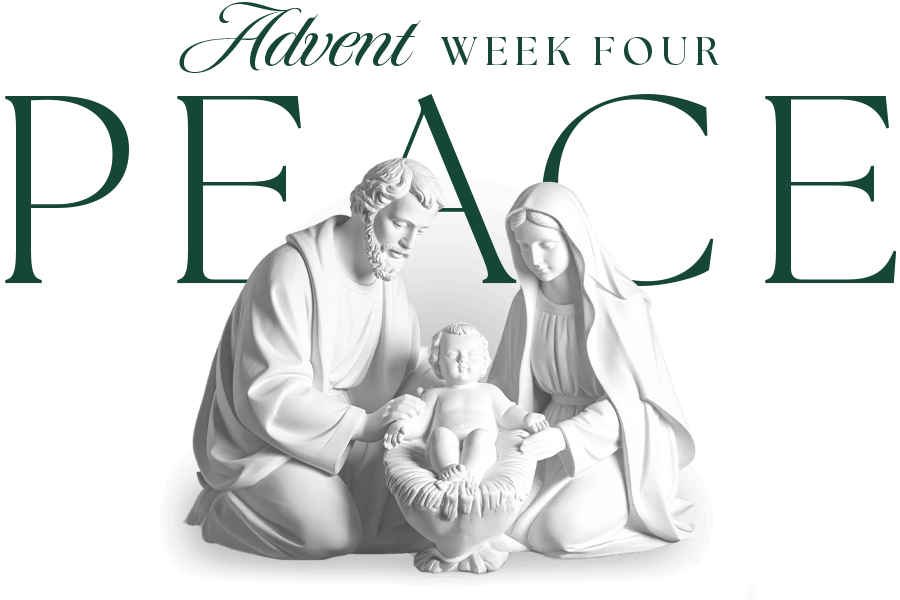
"Peace I leave with you; my peace I give to you"
—John 14:27
The well-known, much beloved poem “A Visit from St. Nicholas” by Clement Clarke Moore begins with these oft-repeated lines, “‘Twas the night before Christmas, when all through the house, not a creature was stirring, not even a mouse….” With only nineteen words, Moore paints a peaceful picture that many of us long to enter. Perhaps this is due in no small measure to the fact that this placid portrait stands in marked contrast to the frantic, even frenetic, pace of our overly full lives. Demands, deadlines, difficulties, disappointments, disagreements and the like cause us to yearn for peace or at least for peaceful moments where “stockings are hung by the chimney with care.”
Amid the so-called “Upper Room Discourse” recorded in John 13–17, Jesus assures his disciples both of his ongoing presence through the Holy Spirit and of his abiding peace. His peace, Jesus contends, enables his followers to take heart and to fear not (note John 14:27; 16:33). This is of one piece with the angelic song sung to unexpecting shepherds who were minding their sheep and their own business: “Glory to God in the highest, and on earth peace among those with whom he is pleased” (Luke 2:14). (Note also that an angel instructs the shepherds to “Fear not…” [Luke 2:10].)
During the season of Advent, believers the world over focus upon the hope, peace, joy, and love that are found in Christ and his coming. (The Latin term [Adventus], from which we derive the English word “Advent,” means “coming” or “arrival.”) Each of these four facets or aspects of Advent (hope, peace, joy, and love) are foundational to and constitutive of the Christian life. The candles that adorn Advent wreaths are meant to remind us of the same. The purple Prophecy Candle representing hope, the purple Bethlehem Candle representing peace, the pink Shepherd’s Candle representing joy, and the purple Angel’s Candle representing love encircle the larger, white Christ Candle, which is rightly at the center, as he is in his Person the one who provides and enables the hope, peace, joy, and love for which we are looking and longing.
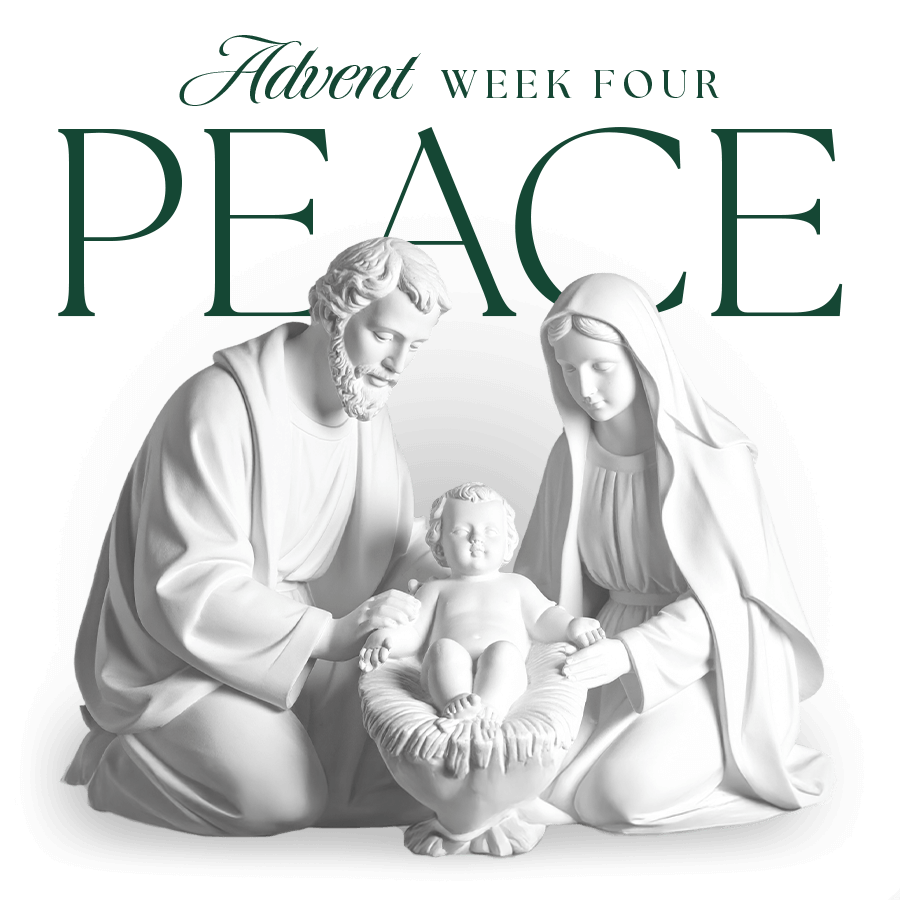
The prophet Isaiah anticipated a day when a “child would be born” and a “son would be given,” who would be called “Wonderful Counselor, Mighty God, Everlasting Father, Prince of Peace” (Isaiah 9:6). At the time when Jesus was born, the Roman state promised peace to the populace, and through their widespread military exploits and brute force had procured a modicum of peace in the Mediterranean world (the so-called pax Romana), however fleeting it would prove to be.
The Epistle to the Ephesians exclaims that Jesus not only came preaching and making peace but also that “he himself is our peace” (Ephesians 2:14-15, 17). Through Christ, we can experience “peace with God” (Romans 5:1). Such peace surpasses all understanding and is meant to guard and to rule our hearts and minds in Christ Jesus (Philippians 4:6; Colossians 3:15).
Ultimately, peace is far more than tranquility. Peace is a gift from God that comes from embracing the Prince of Peace. What is more, the peace we experience from and with God is to be extended to others and exhibited in the way we lead our lives and order our affairs. Isaiah assures that God will keep in perfect peace those whose minds are stayed on him (Isaiah 26:3). The hymn writer Francis Havergal beautifully and accurately captured this truth for all seasons in the refrain of her beloved hymn: “Stayed upon Jehovah, hearts are fully blest, finding, as he promised, perfect peace and rest.”
What threatens to rob the peace that God so freely gives?
How might you be a “peacemaker” in and beyond the Advent season?
Charles J. and Eleanor McLerran DeLancey Dean & Holder of the William M. Hinson Chair of Christian Scriptures, George W. Truett Theological Seminary

Todd D. Still, Ph.D., serves as the Charles J. and Eleanor McLerran DeLancey Dean and William M. Hinson Professor of Christian Scriptures in Baylor University’s George W. Truett Theological Seminary. Dr. Still was named as the seminary’s fifth dean in February 2015. He joined Truett’s faculty in 2003 to teach courses in New Testament and Greek. A Pauline scholar, Dr. Still is the author of numerous books, articles, reviews, and Bible study materials. He has also edited several volumes. In addition to his administrative and academic work and service, Dr. Still is deeply committed to and actively involved in local churches. A licensed and ordained Baptist minister, he frequently preaches and teaches in congregational and conference settings and has served in a variety of ministerial capacities, including frequently as an interim pastor.
A native of Wichita Falls, TX, Dr. Still is married to Carolyn, a founder, administrator, and teacher at Live Oak Classical School. They live in Waco, TX and have two adult sons—Samuel and Andrew. Apart from work, Dr. Still enjoys gardening, golfing, watching Baylor Bear athletics, playing with his family’s dogs, and traveling.
