

Trust in the Lord with all your heart
and lean not on your own understanding;
in all your ways submit to him,
and he will make your paths straight.
— Proverbs 3:5-6 (NIV)
Universities do not simply transmit information; they shape how we think. Academic disciplines from philosophy to psychology to law push us to dismantle certain ways we have understood the world and rebuild them based on rules, logic and evidence. This disciplinary training has important benefits. It also can come to provide the default lenses through which we view the world more broadly.
Today's passage, Proverbs 3:5-6, invites us to step back and recognize the well-worn patterns in our thinking. The passage reminds us that no matter how hard we work to sharpen our intellect, our human understanding is inevitably incomplete. Our thoughts are not God’s thoughts (Isaiah 55:8).
As a law professor who teaches Contracts, I spend a lot of time thinking about bargains. Contract law tends to enforce promises that are made as part of a transactional bargain — promises with strict conditions attached — and does not typically enforce promises of unconditional gifts. Students who take this lesson to heart often start to see potential bargains everywhere and conditions attached to everything; they begin viewing the world through quid pro quo lenses. In today's world, many of us (lawyers and non-lawyers alike) discover these transactional lenses are easy to wear, even if we put them on inadvertently.
Yet, Advent reminds us that not everything is seen clearly through transactional lenses. God so loved the world that He gave His only begotten Son. Jesus lived and died for us though we were, and remain, flawed sinners. We cannot straighten our crooked paths with our own abilities or prowess, but the Lord promises to make our paths straight if we place our trust in Him. Trusting the Lord with all our heart takes a willingness to move beyond our familiar, conditional frameworks, step past our default ways of seeing things and accept the love God has graciously extended to us.
Can you identify any well-worn patterns in your thinking that you might want to revisit or step back from?
Do you at times find yourself slipping into a transactional mentality, thinking about your relationships with others or aspects of your faith in quid pro quo terms? In what ways do you treat your relationship with God as a gift and in what ways do you treat it as a contract?
Associate Professor of Law
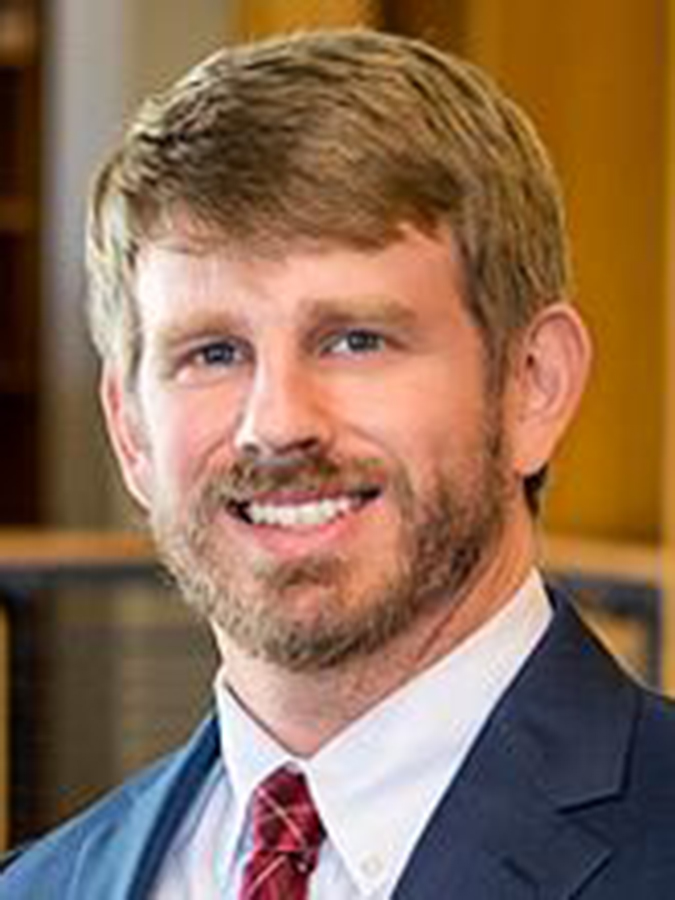
Professor Chris Jaeger joined the Baylor Law faculty in the Summer of 2021, following two years of service as an Acting Assistant Professor of Lawyering at NYU School of Law. Professor Jaeger’s interdisciplinary research examines ways in which legal rules, standards, and processes reflect intuitive beliefs (and misbeliefs) about the human mind. He is currently studying law’s frequently used “reasonableness” standard, applying experimental techniques from psychology to investigate how we decide what is "reasonable."
Professor Jaeger’s scholarship has appeared or is forthcoming in law reviews such as the Yale Law Journal, the University of Chicago Law Review, and the Florida Law Review, and in peer-reviewed journals such as Cognitive Science, Journal of Experimental Psychology: Human Perception and Performance, and Memory & Cognition. In 2025, he received Baylor University’s prestigious Outstanding Faculty Scholarship Award among all university tenure-track faculty, and his article The Hand Formula’s Unequal Inputs was co-winner of the 2025 AALS Scholarly Papers Competition for scholarship by a faculty member in their first five years of law teaching. Professor Jaeger also serves on the editorial board of Psychology, Public Policy, & Law, an interdisciplinary law and psychology journal published through the American Psychological Association.
Professor Jaeger and his wife, Jessica, are the proud parents of two children, an aspiring artist and an aspiring superhero. Professor Jaeger continues to play soccer, tennis, pickleball, and other sports (though not as well as he used to), and he also enjoys coaching his kids, board games, and fantasy football.
