





But the angel said to them, "Do not be afraid, for see, I am bringing you good news of great joy for all the people."
— Luke 2:10 (NIV)
A medical doctor once told me that "there is no such thing as a low-risk pregnancy." She shared this news after I was diagnosed with congestive heart failure while 34 weeks pregnant. As a scholar who writes about pregnancy and pregnancy loss, I know the path from pregnancy to birth is fraught. As a mother of two, I also know the deep joy parents experience upon the birth of a child. The good news of Jesus' birth in Luke 2:10 is indeed a source of great joy for those who have long awaited the promised birth of the Messiah. The joy feels greater still when I consider that Mary's pregnancy was exceedingly (transcendentally) high risk.
In Luke 1:39-45, Mary makes her way unannounced to her cousin Elizabeth's house in Judea to share the news of her pregnancy – news Mary learns from the angel Gabriel who shows up unannounced (as angels do) to report her approaching motherhood (Luke 1:26-38). Although it would be risky for any young person to embark on an unplanned road trip, Mary's departure from her house in Nazareth and the temple in Jerusalem, her spiritual home, while being pregnant and unmarried makes her especially vulnerable to harm. Yet, Mary is not afraid. Like the "lowly shepherds" who are astounded to learn of the Messiah's birth, Mary's shock and uncertainty is transformed into courageous action as she embraces God's call to "let it be" (Luke 1:38).
Luke aptly describes the movement from infertility to fertility to birth in his Gospel through the voices of individual women. The examples of Elizabeth and Mary, like Sarah and Hannah before them, show that even those who are burdened and lack voice in the world can facilitate God's liberatory work. God does not aim for humans to do this work alone. Elizabeth's affirmation of Mary's pregnancy as a blessing for her and all others (Luke 1:28) and Mary's acceptance that "all generations will call me blessed" (Luke 1:48) authorize Mary to experience her pregnancy positively and creatively: as a source and site of loving care. For people of faith, care for one another unfolds within a communal frame of shared living and shared hope – and in the surprising witness of shared joy.
God delivers us from our suffering – from rejection, persecution, pain, and death – with joyous cries: from infant Jesus' first cry to a friend's gleeful cheer to communal sounds of celebration. During Advent, we celebrate the joyous birth of baby Jesus on earth – as we anticipate Christ's future advent or arrival – by caring for one another. Advent joy is already liberating the world by transforming age-old laments into celebratory songs of love for each other because of Christ’s love first shown to us. The astounding, holy aberration of Mary's conception and the mysterious workings of God in salvation history means that the joy of the Christ Child makes for a bigger community of miraculous love for one another. Let us rejoice together in God's creative work of loving care.
Professor of Philosophy, Baylor Interdisciplinary Core, Master Teacher
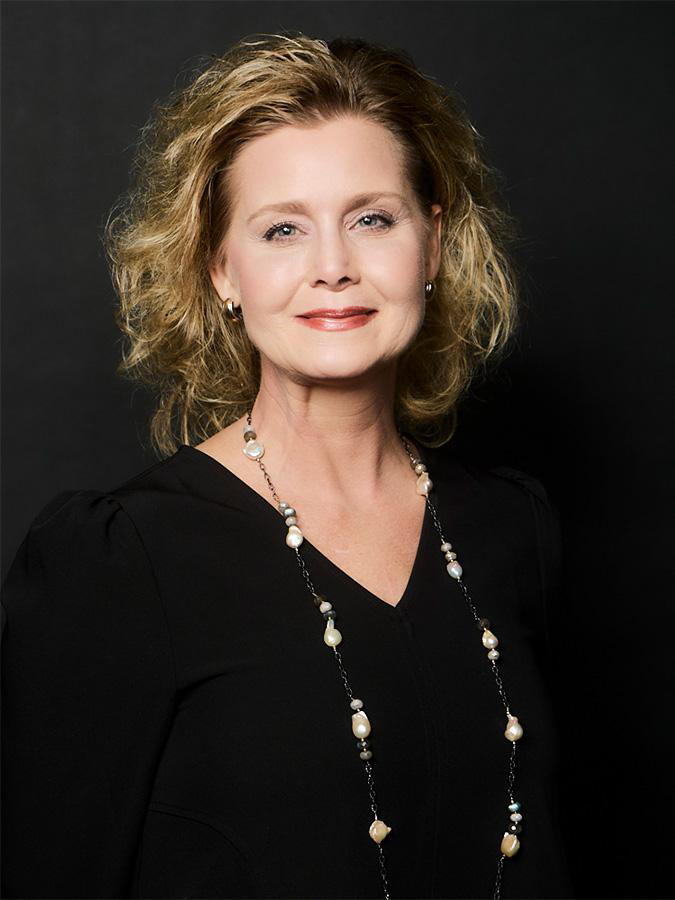
Lenore Wright, Ph.D., is a professor of Philosophy within Baylor’s Honors College. Her disciplinary specialization is aesthetics: the study of art, aesthetic values (judgments of taste), and aesthetic experience. More specifically, her work engages ontological and phenomenological concepts of personhood, including representations and experiences of selfhood–from cultural representations and self-portraits to autobiographical texts. She enjoys analyzing how theories of self (philosophical and theological) shape self-understanding and self-representation. She has been a member of Baylor’s faculty since 1998.
Between 2020-2026, most of her published scholarship has examined the relationship between visual representations of woman (artistic and cultural) and experiences of womanhood. This analysis culminated in a published monograph titled, Athena to Barbie: Bodies, Archetypes, and Women’s Search for Self. She also published several papers on the scholarship of teaching and learning. A lot of her time over these five years has been spent giving professional talks and interviews, directing and contributing to student theses, and leading faculty development. In 2025, she was honored to receive the designation of Master Teacher, the highest honor bestowed by Baylor University for sustained excellence in teaching.
