
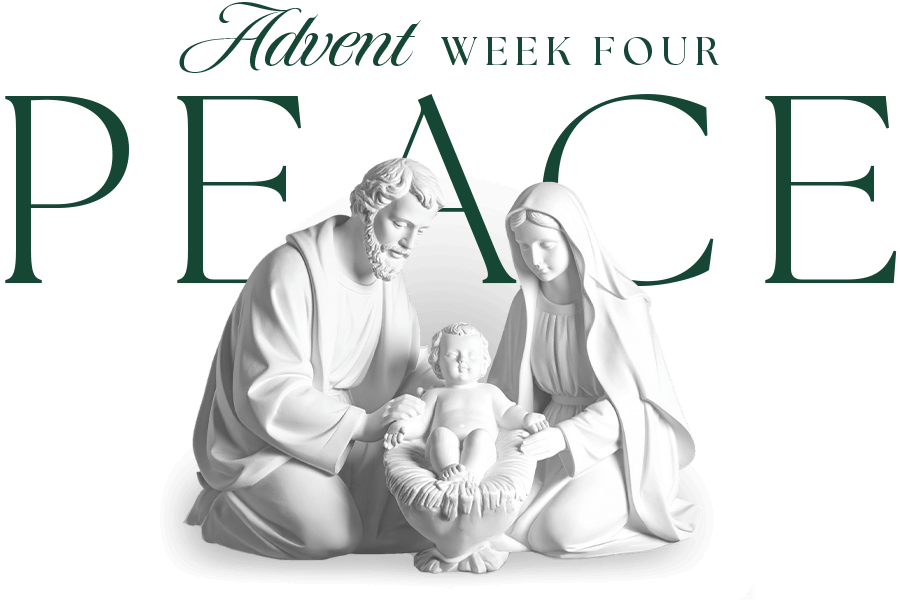
Suddenly a great company of the heavenly host appeared with the angel, praising God and saying,
"Glory to God in the highest heaven,
and on earth peace to those on whom his favor rests."
— Luke 2:13-14 (NIV)
Do you happen to have a favorite Christmas carol? Is it "Silent Night"? "It Came upon a Midnight Clear"? "O Holy Night"? "O Little Town of Bethlehem"? "O Come All Ye Faithful"? Whether you have a particular favorite or not, I trust you will have opportunity this Christmas Day to sing robustly, hopefully surrounded by family and friends, any number of beloved carols.
Woven into Luke's nativity is four, non-metrical songs or hymns known as canticles. Frequently referred to using their Latin titles (drawn from the first word[s] of the songs in the Vulgate [an ancient Latin translation of the Bible]), they are as follows: Mary's Magnificat (Luke 1:46-55); Zechariah's Benedictus (Luke 1:68-79); the heavenly host's Gloria in Excelsis (Luke 2:14); and Simeon's Nunc Dimittis (Luke 2:29-32). The third canticle in the third gospel, which is both the shortest and the most familiar, is the focus of this reflection.
Once upon a time, near Bethlehem of Judea, an angel appeared to unexpecting shepherds who were minding their own business, "keeping watch over their flocks at night." Understandably, they were terrified by the angel's appearance. After encouraging them not to be afraid, the angel announced to them, "good news of great joy for all people," namely, the birth of the Messiah in Bethlehem (Luke 2:8-12).
Before the shepherds could hightail it to town in pursuit of the sign given to them by the angel (that is, a baby wrapped in clothes lying in a manger), a multitude of the heavenly host or army suddenly appeared with the angel and began to praise God saying: "Glory to God in the highest and on earth peace to those on whom his favor rests" (Luke 2:13-14).
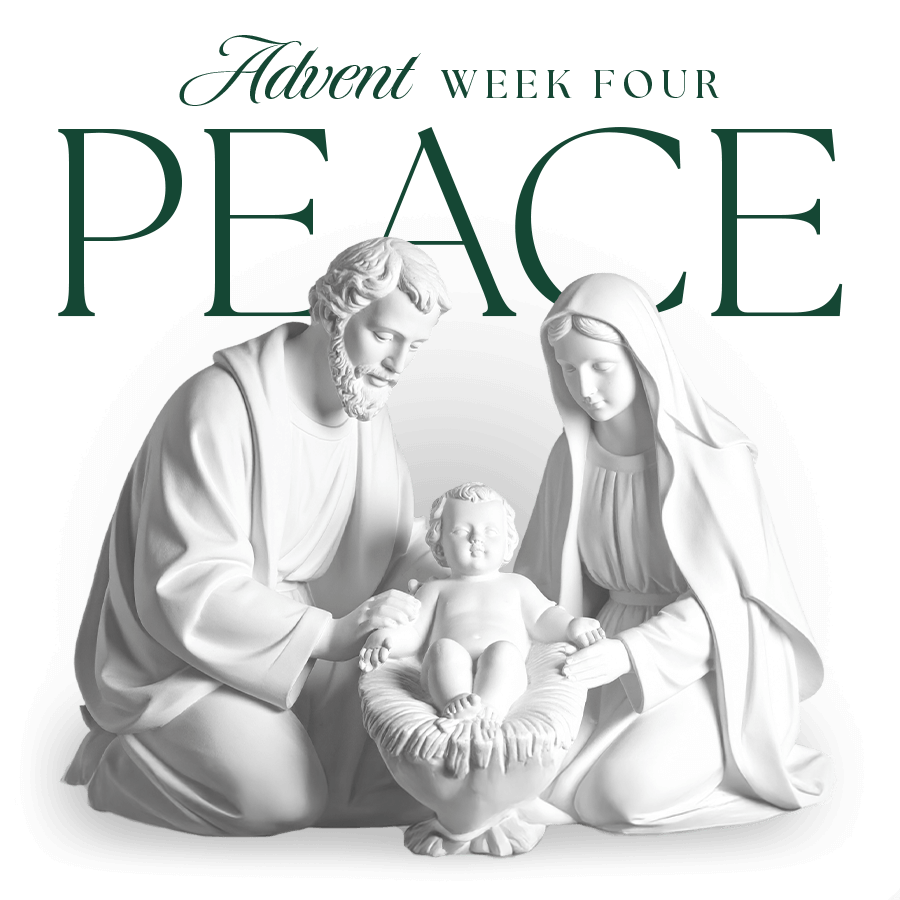
This abbreviated angelic anthem both extols God and extends peace. The arrival of the long-awaited, much-anticipated Messiah not only prompted the heavenly host to praise God from whom all blessings flow but also to pronounce peace or well-being upon people blessed by God, not least through the life, ministry, and teachings of Jesus.
Christmas affords us a special opportunity to thank God for the indescribable gift of his Son (note 2 Corinthians 9:15), who can save us from our sins and ourselves, and to embrace the grace and peace the Lord offers to all people through the child born for us and given to us, whom we regard and regale as "Wonderful Counselor, Mighty God, Everlasting Father, Prince of Peace" (see Isaiah 9:6). Merry Christmas!
Charles J. and Eleanor McLerran DeLancey Dean & Holder of the William M. Hinson Chair of Christian Scriptures, George W. Truett Theological Seminary

Todd D. Still, Ph.D., serves as the Charles J. and Eleanor McLerran DeLancey Dean and William M. Hinson Professor of Christian Scriptures in Baylor University’s George W. Truett Theological Seminary. Dr. Still was named as the seminary’s fifth dean in February 2015. He joined Truett’s faculty in 2003 to teach courses in New Testament and Greek. A Pauline scholar, Dr. Still is the author of numerous books, articles, reviews, and Bible study materials. He has also edited several volumes. In addition to his administrative and academic work and service, Dr. Still is deeply committed to and actively involved in local churches. A licensed and ordained Baptist minister, he frequently preaches and teaches in congregational and conference settings and has served in a variety of ministerial capacities, including frequently as an interim pastor.
A native of Wichita Falls, TX, Dr. Still is married to Carolyn, a founder, administrator, and teacher at Live Oak Classical School. They live in Waco, TX and have two adult sons—Samuel and Andrew. Apart from work, Dr. Still enjoys gardening, golfing, watching Baylor Bear athletics, playing with his family’s dogs, and traveling.
